
By Emily Crawford
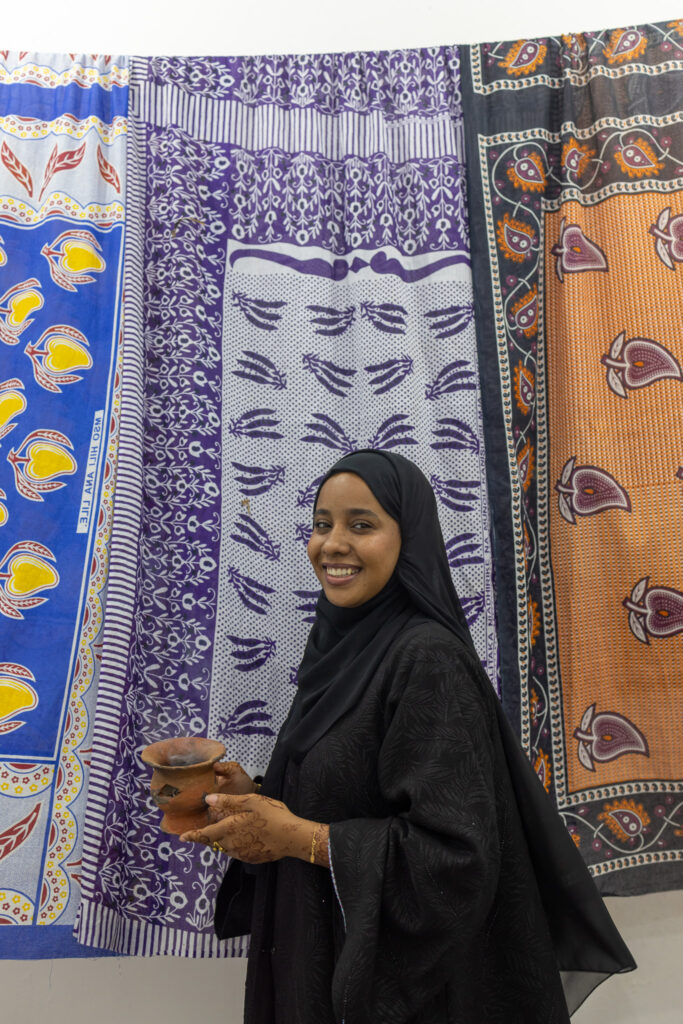
Behind one of Changa Bazaar Street’s most magnificent carved doors, the kind that makes you stop mid-step in Stone Town’s maze of alleyways, frankincense smoke curls through an open workshop with slightly rustic white walls akin to a gallery space. This is the new home of The Kanga Project: part shop, part workshop, part gathering place. At its heart is artist and founder Muna Aly, who today greets visitors holding a vessel of smoking resin like an offering, her smile as welcoming as the space itself.
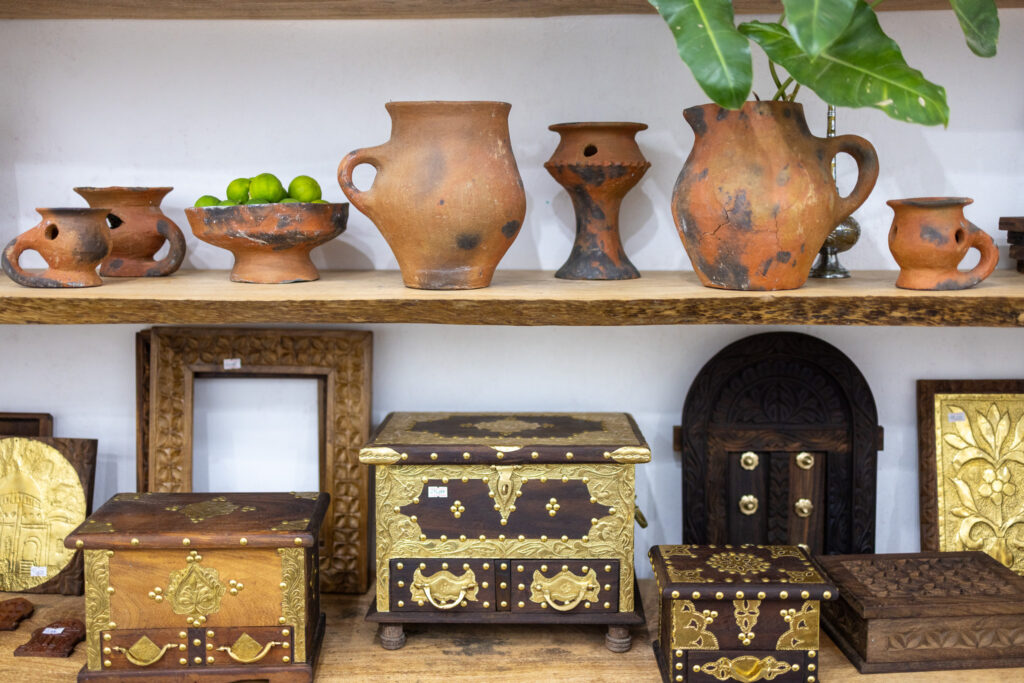
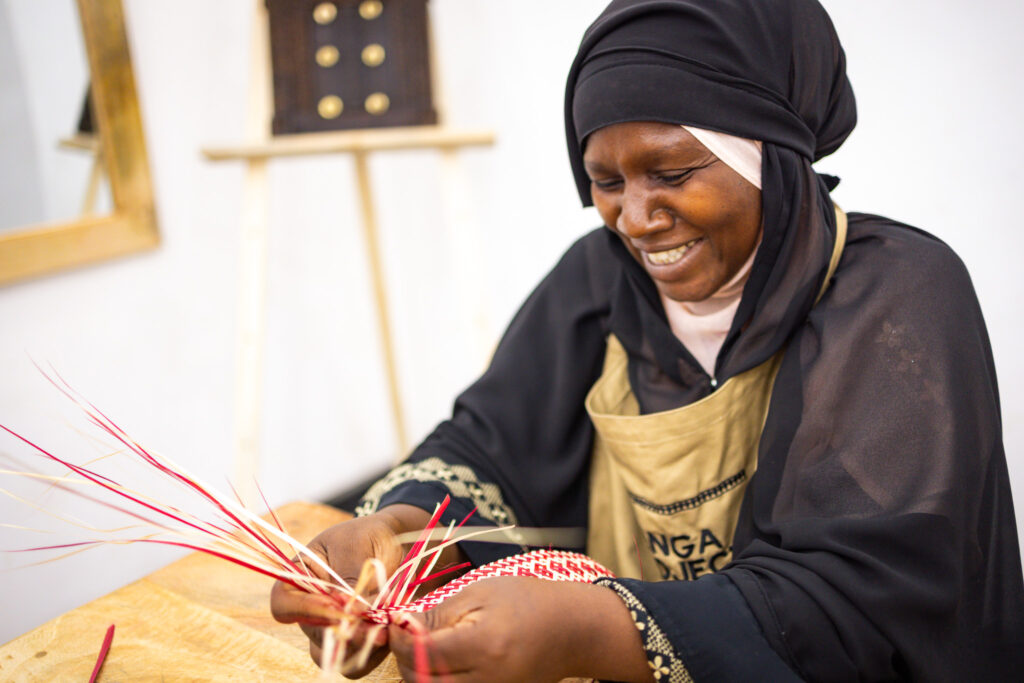
Inside, a woman artist sits cross-legged on a woven mat, her hands moving in the ancient rhythm of ukili basket-weaving. A jovial older man, the banana leaf artist in residence, calls out greetings to locals who drift past the open door, peering in with curiosity. Carved boats rest alongside traditional Zanzibar chests, with freshly hammered gold brass. Ceramics bristle with plant cuttings. And covering the walls, a riot of colour: handwoven bags in patterns that sing of sea and spice, each one impossible to choose between. In the centre is a communal table – inviting an immediate sense of learning, collaboration, sharing.
“Art is the way of life,” Muna says. “We’re here to revive, restore and celebrate Zanzibari culture… as soon as you come into our workshop, you kind of feel that sense of aliveness, of how these products come to life, that are all created by hand by different people.” She is a Zanzibari-English University of the Arts London graduate who has worked in documentary photography, print design, and pottery, and has now created something rare in modern Stone Town – a space where Zanzibari artists actually work, where visitors can watch craftsmanship unfold and even participate, rather than simply browse finished goods imported from elsewhere.
The workshop is home to eight core artists representing broader collectives: twenty women who’ve reignited their passion for weaving bags after the tradition nearly vanished, ceramicists working together to preserve ancient techniques. Through charitable work, Muna travels deep into Zanzibari communities, re-discovering artisanal practices she remembers from childhood. “These are elements of home,” she explains, pieces of an intangible heritage slipping away as Stone Town’s soaring prices push artists far from the historic centre.
But The Kanga Project isn’t about nostalgia, it’s about fair value, continuity, and thriving. Muna has raised profit margins for every artist, refusing to accept prices that don’t reflect a week’s skilled labour. “If we value ourselves as artists, then others will value us,” she insists. The Kanga Project is as much about restoring self-belief as it is about restoring techniques. The space hosts pop-up workshops at hotels across the island and brings Zanzibari university students in to learn from master craftspeople. “We are inspiring a seed of creativity in our Zanzibar kids”, she beams. They proudly send pieces of the archipelago’s creative brilliance home in travellers’ suitcases.
As supplies arrive, as jokes fly in Swahili, as visitors inquire about the next workshop, you understand what Muna means about “sharing a legacy.” This isn’t preservation behind glass, it’s tradition as a living, breathing, evolving thing. In conversation, in labour, in smoke and fibre and clay, Stone town quietly remembers itself and weaves its future from its past.