By Emily Crawford
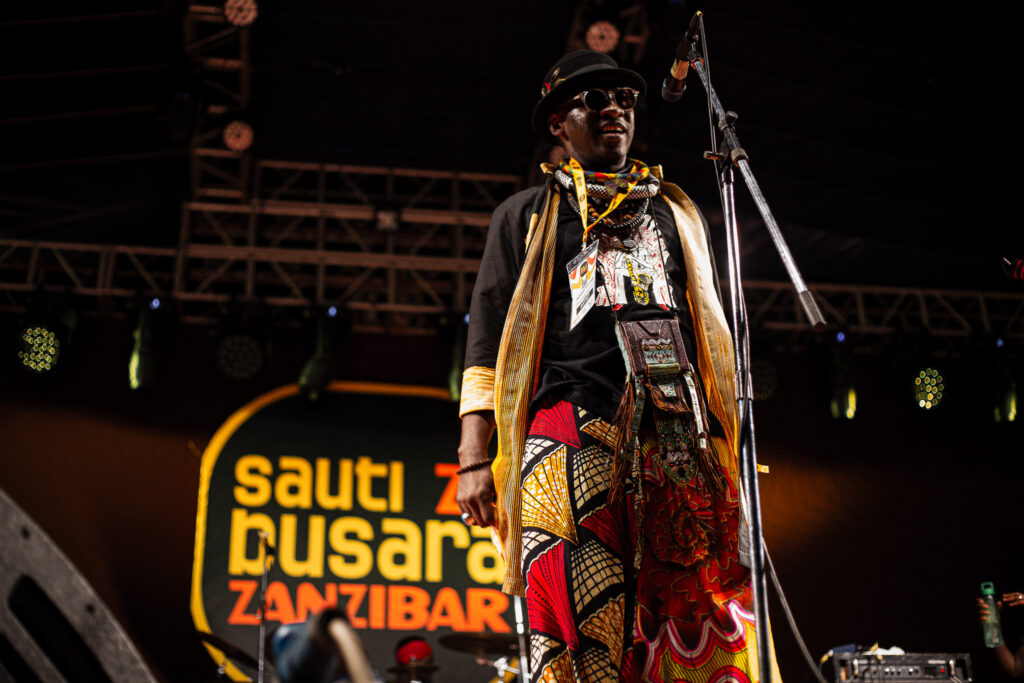
Day 1 started slowly after the team arrived from various corners of the world and island. Following a stunning sunset meeting over spiced mango drinks, I collected my pass and entered the festival grounds. I took a deep breath. This marked the first year Busara has left its historic home at Ngome Kongwe (Old Fort), and I worried the shift might dilute the unique magic and communal spark of previous years.
As we walked in, relief washed over me. Busara’s spirit, and our Zanzibari community, thrives. No mere location change could extinguish the furnace of creative energy this festival ignites. Mnazi Moga’s grounds have been transformed into an intimate space echoing past years, with two stages nestled close together. Local cafés and vendors offered fragrant Swahili and fusion dishes like Urojo. Closer to the ocean, the venue felt breezier and more open. We danced on beautiful, sandy African earth. Ample seating surrounded expansive dance floors. Once the music began and we pressed near the stage, the signature Busara energy radiated through the joyful, warm, diverse crowd. Stone Town may be changing fast, but many exchanged knowing glances: all is well with East Africa’s largest festival. Above the main stage, this year’s slogan proclaimed: “Let Them Shine.” A shining continuum indeed.
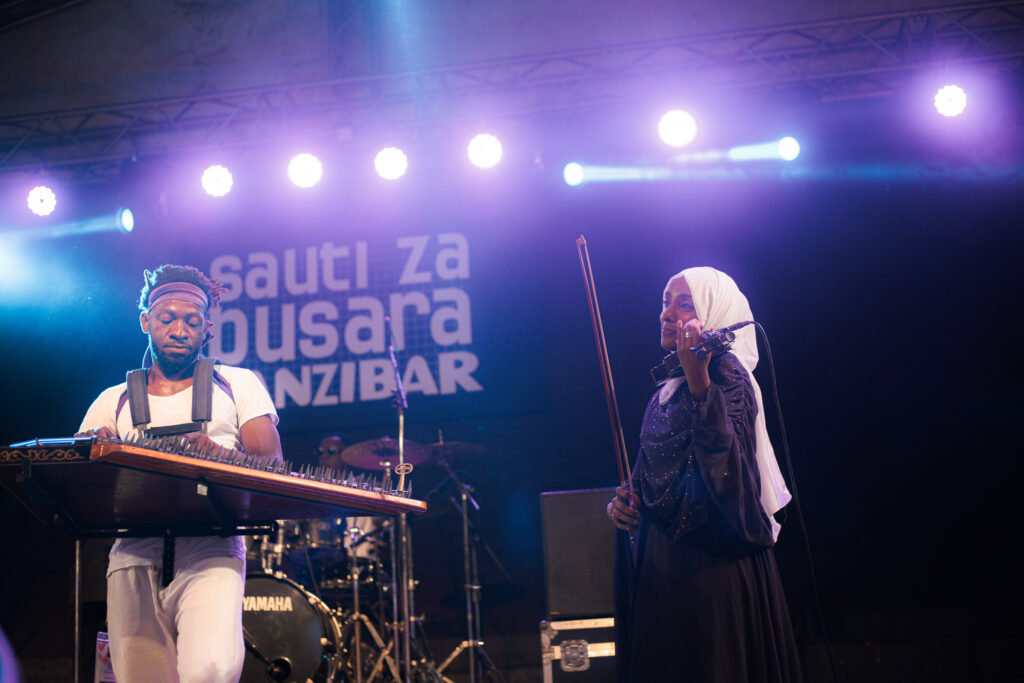
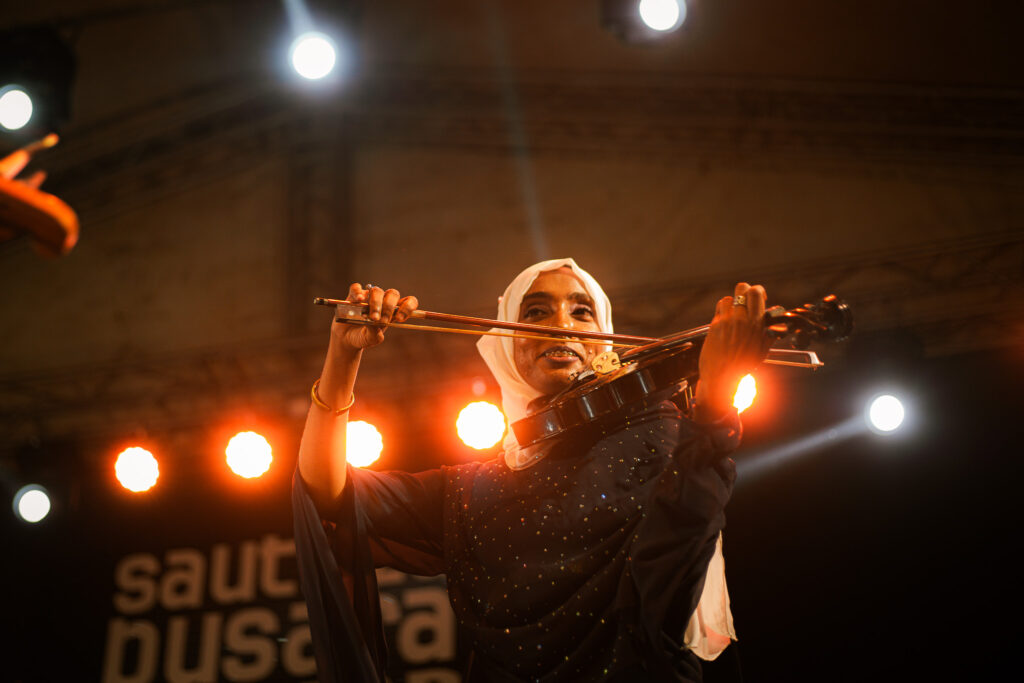
First up I caught Tarajazz, self-described “musical explorers” from Zanzibar’s Dhow Countries Music Academy (DCMA), the island’s only music school. They masterfully fuse traditional Taarab with international jazz. During an early song, they beckoned the crowd in a truly Zanzibari way: “come, come! But pole pole” (slowly, slowly).” Between songs, they explained their mission: developing fusion music to “give more power to the traditional, combining rhythms.” I danced beside DCMA director Halda (pictured), who watched with visible pride. The band shared their research from Pemba, introducing the Kibati rhythm, usually reserved for weddings and spiritual ceremonies, which merges rapid-fire spoken word poetry which they combined with undulating jazz saxophone and bass. The evening’s highlight arrived when DCMA student Nivea unleashed expert rap flows, stunning us all. The waning moon rose just beside the stage as strangers, travelers, and locals exchanged glances of awe and anticipation.
Kara Sylla Ka & Baye Fall Band closed the night. The bass drum’s vibrations pulsed deep into our chests: an initiation. Their sound blended blues with hints of reggae and a distinct Senegalese character. It was a joy especially to see the talking drum feature on some songs. Call-and-response rippled through the crowd before they launched into Fela Kuti’s ‘Lady,’ reminding us of the festival’s Pan-African power. Afterward, I stopped by the afterparty (happening nightly) at The Box by Ashley Maybe, for a nightcap among the buzzing, excited crowd. One more boogy to Afro House before recharging for day two.