
Sunday Lunch at Msonge Family Farm.
By Emily Crawford
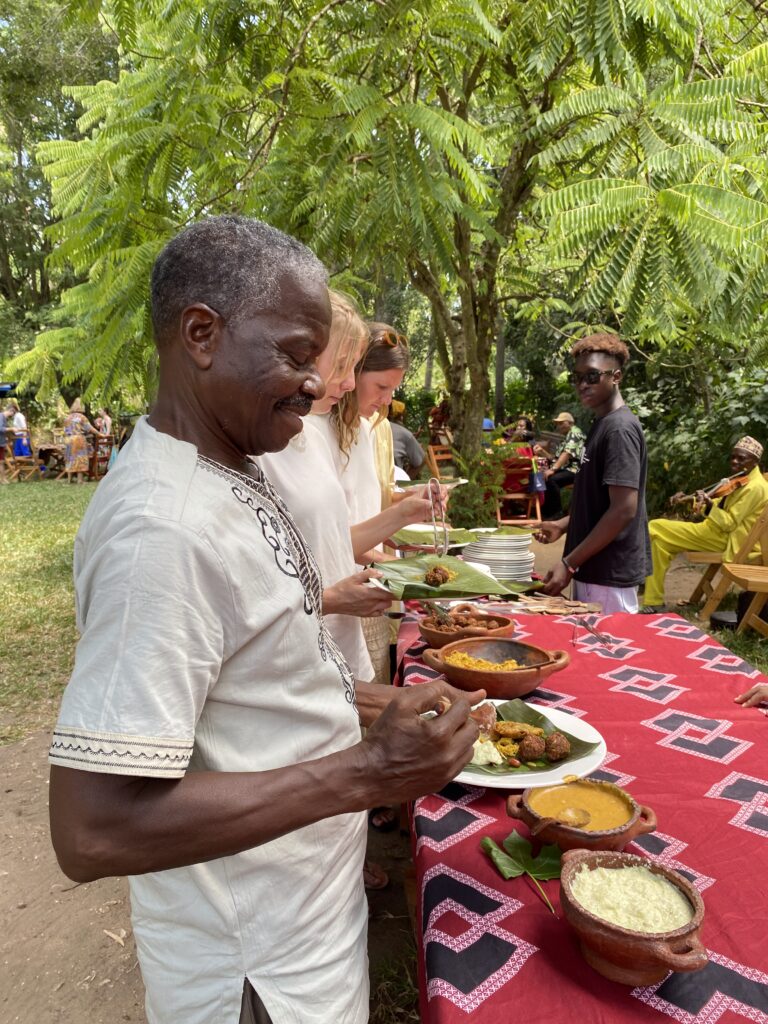
Twenty minutes drive from the bustling streets of Stone Town in the village on Shakani, something truly nourishing, delicious, and inspiring happens every Sunday at Msonge Organic Family Farm. In a lush grassy garden, beneath the dappled shade of mango trees, the air becomes a fragrant invitation. Notes of cardamom and cloves mingling with the earthiness of fresh-turned soil, and sweetness of ripening jackfruit mingles with herbs and wood smoke wafting from an outdoor kitchen, full of chatter and commotion.
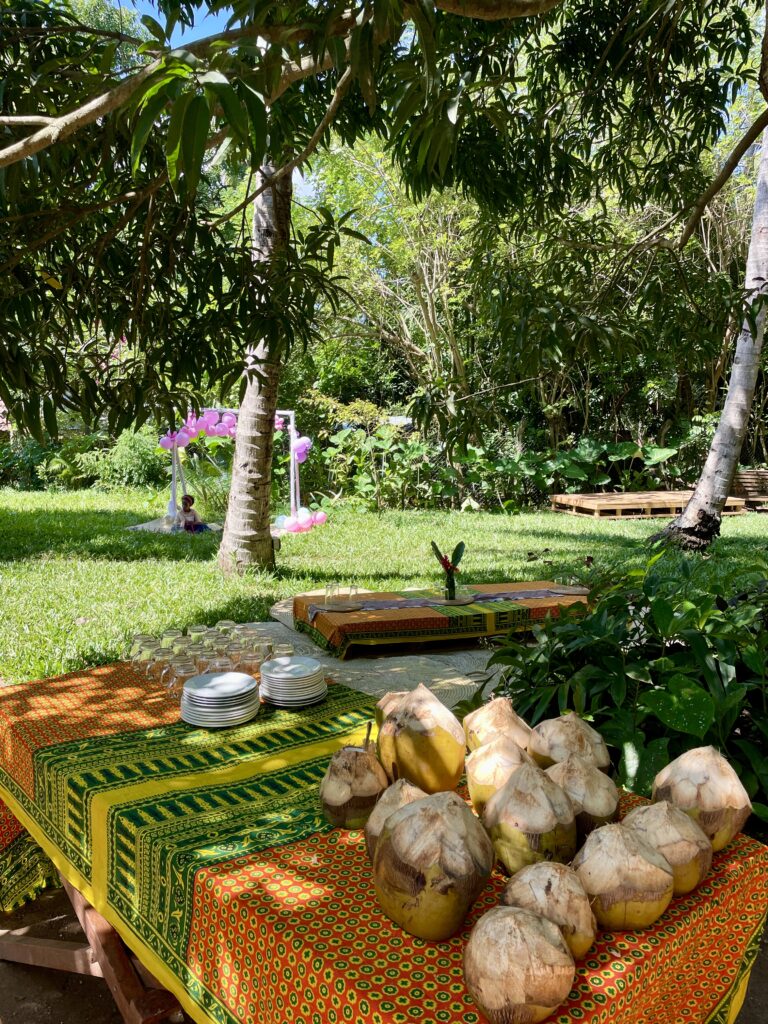
Picture this: you’re seated cross-legged on a traditional mkeka straw mat, the woven fibers cool beneath you, surrounded by fifteen acres of lush permaculture gardens. Children play between rows of cassava and chaya greens, as families, locals and visitors laze and chat happily, while poetic taarab music plays live on violin. As you wait in anticipation for the wafting aromas to transform into the arrival of chakula, you realise that this is more than a standard farm to table lunch experience. It’s an intimate window into the rich community surrounding Msonge Family farm, and a complete sensory immersion into authentic Swahili culture – organic, kilimo hai food cultures.
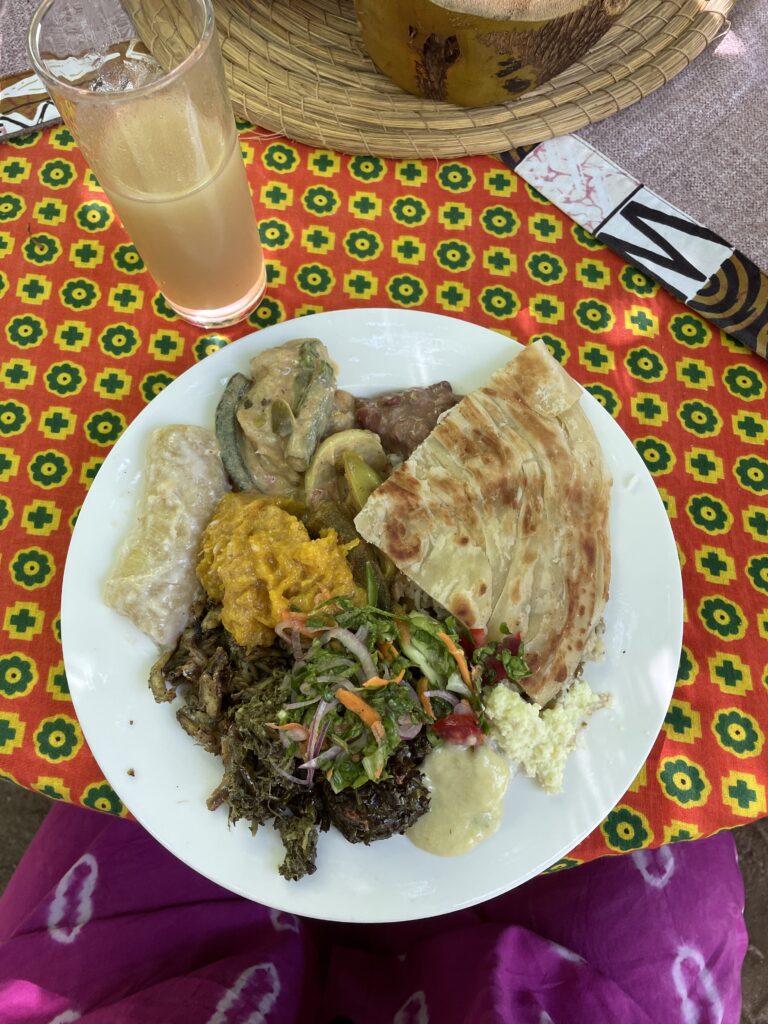
The feast unfolds in waves, each course more generous than the last. First come the fried snacks of crispy badia falafel that shatter between your teeth amidst dollops of limey coconut chutney, battered chaya leaves and golden crunchy shelli shelli (breadfruit) with tangy tamarind sauce and pili pili. Then the glorious main event: over twenty different dishes spread across the communal table in a stunning display of abundance. Large clay pots wrapped in banana leaves reveal bowls of fragrant coconut curries rich with vegetables harvested just steps away. There’s often perfectly spiced pilau rice, fluffy and aromatic, alongside slow-cooked beans, grilled seasonal vegetables, and tender meats or fish infused with cloves, cardamom, turmeric and garlic. Every dish feels deeply Zanzibari, comforting yet vibrant.
Dr. Mwatima Juma, known lovingly as “Mama Pakacha,” moves between guests with the warmth of someone welcoming family home, passionately informing guests of the importance of regenerative farming practices, sharing that almost every ingredient was picked that very morning, some from plants just meters away from where you sit. Her family and team, headed by chief cook Nachum Makame has transformed the farm’s organic bounty into plates that tell stories of African heritage, of Arab traders, Portuguese explorers, and Indian spice merchants who shaped these islands’ unique cuisine.
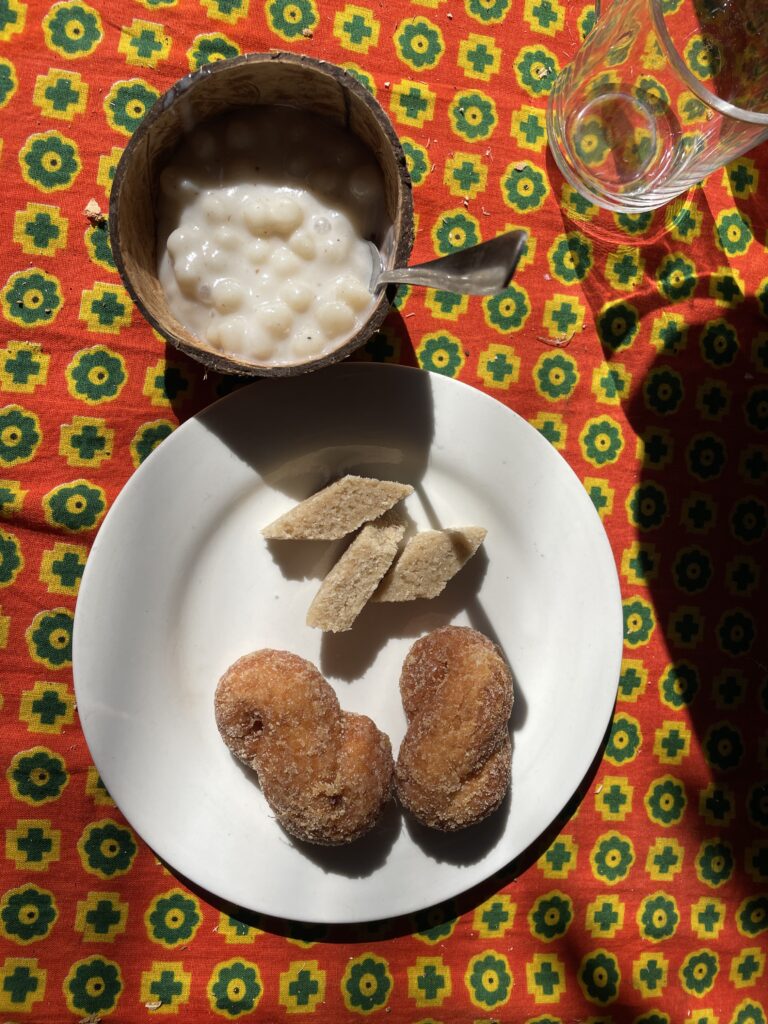
Just when you think you couldn’t possibly eat another bite, the sweet finale arrives: a surprising curation of morsels like sticky mandazi dusted with sugar and peanut and coconut kashata. Freshly brewed Swahili coffee perfumed with ginger and cloves arrives alongside fragrant chai, the perfect companions for lingering conversations as the afternoon stretches slowly on.
Between courses, farm tours wind through the property where cinnamon bark dries in the sun and golden mangoes hang heavy on branches. Strangers become friends over shared platters and shared stories, locals celebrating with their families mingling with travellers seeking something more authentic than resort buffets. What makes the Msonge Family Farm lunch so special isn’t only the food, although the abundance and authenticity alone is unforgettable. It’s the feeling of being welcomed into something genuine, and important, where innovation meets intangible heritage and conservation in action. The farm and land itself feels alive, feeding both the meal and the possibility for bridging across cultures, histories, for the weaving of a more sustainable future.
At just 20 USD per person, Msonge’s Sunday lunch offers something far more precious: a genuine taste of Zanzibar’s soul, served with love – for community, for culture. As the Sunday fades into evening and guests trickle out, you leave full in every sense of the word. Of food, of stories, of the rare pleasure that comes from eating exactly where your meal was grown, with the people who grew it.