
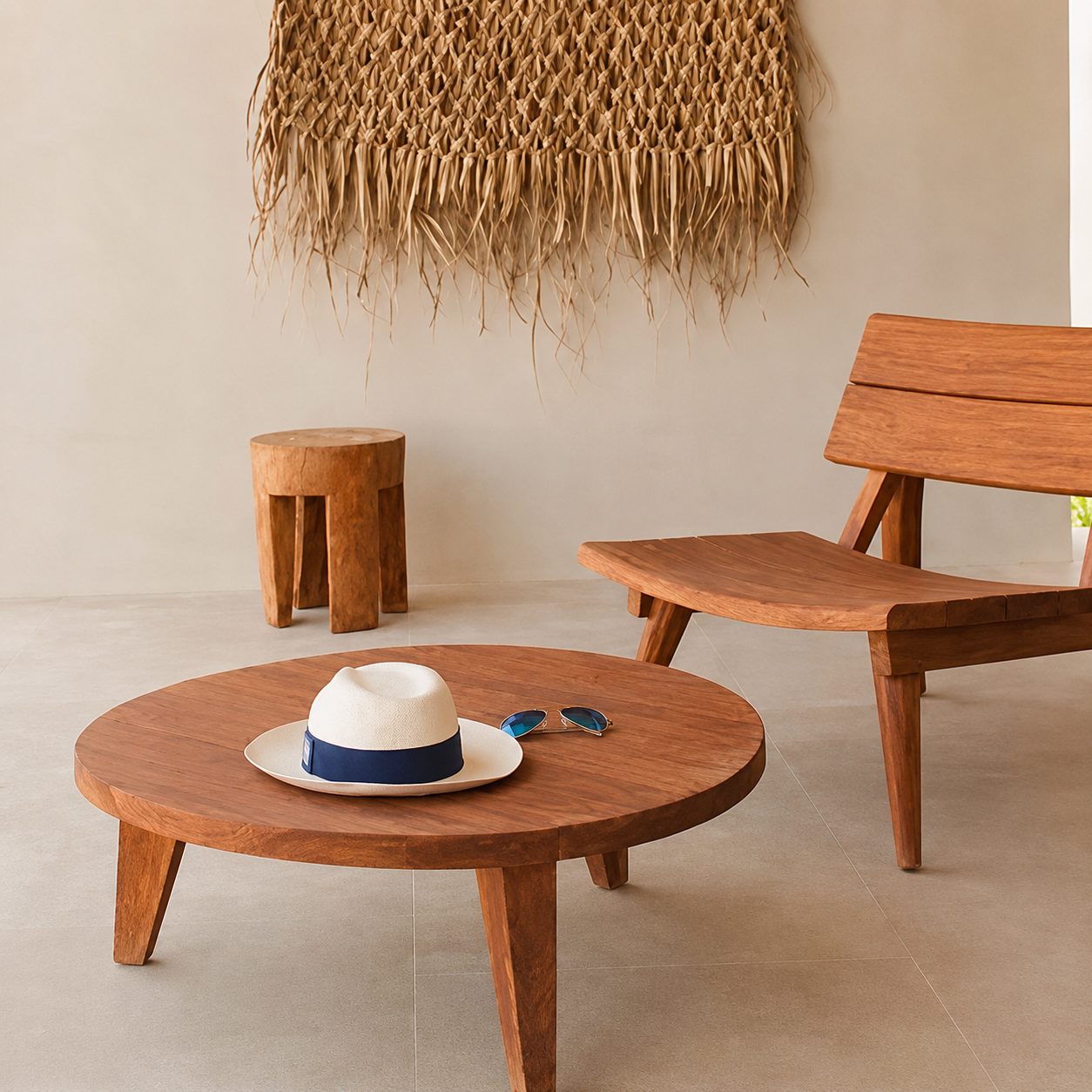
What inspired you to pursue interior design, and how did Bagamoyo Home come to life? What is the story behind the name “Bagamoyo Home”?
I grew up between Tanzania and New York, and my family often spent weekends in the Hamptons-a coastal destination known for its distinctive culture, beautiful homes, and understated luxury. Because of those experiences, design has always represented a blend of cultures, places, and lifestyles for me.
My first job in New York was at Find New York Magazine, where I worked in advertising. Over time, I became the person responsible for arranging furniture and planning layouts for events. I also worked in fashion through an organization I founded and later became involved with New York Fashion Week. Without consciously planning it, I continually found myself drawn to spaces, aesthetics, and the atmosphere a room creates.
During that period, I fell in love with transforming furniture. I would find second-hand pieces around New York and Long Island, take them into a garage, and restore them myself-sanding, painting, repairing, and learning through experience. I practically lived at Home Depot! I never attended design school; I taught myself through passion, curiosity, and obsession.
However, my love for design began much earlier. My parents lived in Holland before returning to Tanzania, and our family home was filled with Nordic furniture; spindle-leg tables, clean lines, and warm woods. As a child, I did not know the terminology, but I understood how those pieces made me feel. I have also been told that I often wandered into workshops and treated sanding wood like a fun game.
Later, I married into an Italian family with a long tradition of craftsmanship and refined interiors. All these influences-Nordic simplicity, Italian elegance, New York creativity, the Hamptons’ coastal lifestyle, and my Tanzanian heritage—shaped my eye and identity as a designer.
That is how Bagamoyo Home came to life.
The name comes from Bagamoyo, one of Tanzania’s most historic coastal towns. To me, Bagamoyo represents heritage, craftsmanship, and roots. It is a place where culture meets the ocean—calm, soulful, and artistic. I wanted a name that felt deeply Tanzanian while also evoking the warmth and emotional connection of home. Bagamoyo Home is about creating timeless pieces that carry stories, culture, and meaning.
How would you describe your design philosophy and approach to creating custom furniture and spaces? What principles do you prioritize?
My philosophy is simple: create pieces and spaces that feel lived-in, soulful, and timeless. A home should tell your story rather than simply follow trends.
I prioritize comfort, warmth, natural textures, and honest craftsmanship. I am drawn to an aesthetic that blends cultures; Nordic simplicity, Italian detailing, and the warmth of the Swahili coast.
My creative process begins with understanding the client: how they live, what they love, and how they want their space to feel. From there, I create mood boards, sketch concepts, and refine the ideas collaboratively. The execution is very hands-on. I work closely with local artisans, personally select materials, and remain involved from the beginning of the project to the final installation.
Simplicity, authenticity, and comfort guide everything I design.
How do you balance functionality and aesthetics? What materials do you use, and how do you incorporate sustainability?
Functionality always comes first. A piece may be beautiful, but if it does not support your lifestyle, it becomes decoration rather than thoughtful design.
I use materials that are practical, natural, and timeless, including solid wood, natural fabrics, rattan, rope, bamboo, and metal accents. These materials age beautifully and help create warm, grounded spaces.
Sustainability is also very important to me. Whenever possible, I source locally, use natural finishes, and collaborate with Tanzanian artisans. I believe in creating durable pieces that can last for years rather than contributing to fast-furniture trends that quickly fade.
For me, sustainability means respecting the environment, the craft, and the people behind the work.
What has been your most challenging project, and how did you overcome it? Can you share a project you are particularly proud of?
One of my most challenging projects involved an extremely tight timeline and constantly changing requirements. I had to restructure my production team, let certain members go, and completely rebuild our workflow. It was a difficult period, but it taught me valuable lessons about leadership, patience, and the importance of surrounding yourself with the right team.
One project I am especially proud of is a collection of 12 coastal villas I designed in Zanzibar. It was a complete transformation- empty rooms became warm, inviting spaces filled with natural textures, custom-made furniture, and a soft Afro-Mediterranean aesthetic. The client trusted my vision completely, and the finished spaces felt authentic, soulful, and beautifully connected to Zanzibar.
I am also very proud of the furniture I created for Shanga Restaurant. I consider it one of my greatest achievements.
How do you ensure your designs reflect a client’s personality or brand identity?
I always say that I am not designing for Pinterest – I am designing for a real person.
I take time to understand my clients, their lifestyles, and what genuinely matters to them. I involve them throughout the process, from mood boards and material selections to sketches and prototypes. The experience is collaborative, personal, and intentional.
The ultimate goal is for clients to walk into the finished space and immediately feel, “This is so me.”
How did you begin working with resorts in Zanzibar? What was your first project, and how do you design for both local and international guests?
My work in Zanzibar began organically. A resort owner saw some of my custom furniture at an embassy in Dar es Salaam and reached out to me. My first project on the island was a villa interior, followed by custom furniture for Kizikula, a boutique hotel in Kizimkazi. From there, word of mouth created more opportunities.
Designing for resorts requires balance. The spaces must feel authentically local while remaining globally appealing. I combine Swahili elements – such as carved wood, coral textures, and coastal colour palettesm- with Mediterranean warmth and clean, contemporary lines.
The goal is for international guests to experience the magic and character of Zanzibar while ensuring that local people can still see themselves, their heritage, and their culture represented in the design.
Where do you find inspiration for your designs, especially when working in Zanzibar?
Zanzibar inspires me endlessly; the ocean, the old streets of Stone Town, the carved doors, the spice colours, coral-stone walls, dhows, happy children running around, the people, and even the island’s chubby cats!
There is texture, character, and beauty everywhere. Zanzibar has a soul, and I try to translate that soul into every project I create on the island.
What is Bagamoyo Home’s mission, and how do you see it evolving in the future? Are there any upcoming projects you can share?
Bagamoyo Home’s mission is to create beautiful, timeless interiors and handcrafted furniture that celebrate Tanzanian talent and craftsmanship. I want to show the world that locally made design can be refined, elegant, and globally competitive.
I see the brand expanding through more resort collaborations, a stronger custom-furniture collection, and eventually a physical showroom in Zanzibar to complement our main branch on the mainland. I want the showroom to embody our distinctive Afro-Mediterranean aesthetic.
We also have several exciting projects ahead, including new villas, a boutique resort, and a 90-room luxury residential development in Zanzibar. I cannot wait to share more about them soon.
You have a background in public relations. What motivated you to transition into interior design, and how has PR shaped Bagamoyo Home?
Public relations taught me how to build a brand, communicate a story, and understand people. However, deep down, I always felt most alive when I was creating – designing spaces, building furniture, and restoring pieces with my own hands. Transitioning into interior design felt like returning to who I truly was.
My PR background helped me position Bagamoyo Home clearly and professionally. It taught me how to present ideas confidently, communicate a strong vision, and build trust with clients. It also gave me discipline, storytelling skills, and emotional intelligence all of which are essential in design.
The transition was not easy, and I had to prove myself from the beginning. However, every challenge confirmed that I was on the right path.
How did you build credibility after leaving PR? Was there a defining moment when you realized design was your true calling?
I built credibility through consistency, hard work, and quality one project at a time. Every satisfied client became a reference, and word of mouth gradually helped the brand grow.
The defining moment came when clients began giving me complete creative freedom. When someone hands you a blank space and says, “Do what you think is best,” you realize they trust your vision completely. That was when I knew I was doing what I was meant to do.
What final advice would you give aspiring interior designers and entrepreneurs in Tanzania?
Start where you are, with what you have. Start scared, and start alone if necessary.
Passion matters more than perfection. Continue learning, remain curious, and do not be afraid of making mistakes they are part of growth. Most importantly, stay true to your vision.
Tanzania has extraordinary talent, creativity, and potential. When you genuinely believe in your craft and consistently produce good work, others will begin to believe in it too. Learn more about Bagamoyo Home See More
Share this post: